The demand for skilled digital marketing professionals continues to rise as businesses shift budgets toward digital channels.
From startups to established brands, companies look for marketers who can plan, execute, and optimise campaigns that deliver measurable results.
As a result, many students enrol in an Advanced Digital Marketing Course hoping to secure quick and reliable job placement.
However, a common dilemma remains unanswered for many aspirants: should they choose a course built around real-time projects or rely on recorded courses that promise convenience and low cost?
Understanding the difference between these two training formats is critical for anyone serious about building a career with strong placement outcomes.
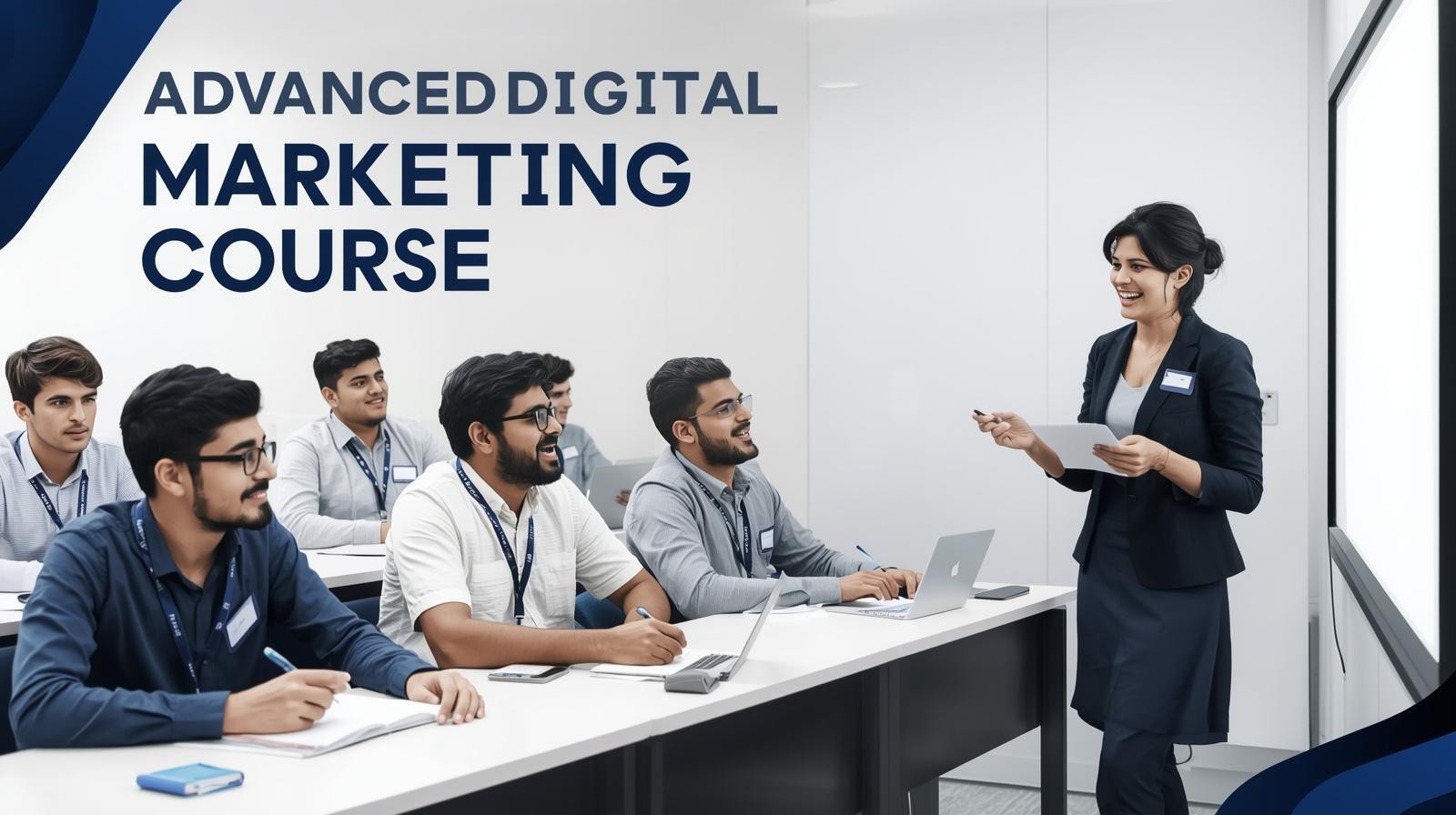
Understanding Recorded Digital Marketing Courses and Their Limitations
Recorded digital marketing courses are widely available and often marketed as beginner-friendly and flexible. Students can learn at their own pace, revisit lessons anytime, and access content from anywhere.
These advantages make recorded courses attractive, especially to working professionals or students seeking a low-investment entry into digital marketing.
However, when the goal is job placement, recorded learning has several limitations that cannot be ignored.
Most recorded courses focus heavily on theory and tool demonstrations rather than real-world application.
Students watch videos explaining SEO, Google Ads, or social media marketing, but rarely get the opportunity to run live campaigns.
Without hands-on experience, learners understand concepts in isolation but struggle to apply them in practical situations.
This gap becomes evident during interviews, where employers expect candidates to explain how they handled budgets, analysed campaign performance, or solved real marketing problems.
Another major drawback is the lack of mentorship and feedback.
Recorded courses do not offer personalised guidance, doubt resolution in real time, or performance evaluation.
Students may complete an Advanced Digital Marketing Course certificate yet remain unsure about their skills. While competitor platforms promote recorded learning as industry-ready education, recruiters usually prioritise candidates with demonstrated practical experience over certificates alone.
This is why recorded courses often fail to deliver strong placement outcomes, even if the content quality appears decent.
Why Real-Time Project-Based Training Leads to Better Job Placement
In contrast, an Advanced Digital Marketing Course built around real-time projects closely mirrors how digital marketing works in actual companies and agencies.
Real-time project training immerses students in live or simulated business environments where they handle real scenarios such as keyword research for websites, running paid ad campaigns, managing social media calendars, and tracking analytics data.
This experience builds both technical skills and professional confidence.
Project-based learning helps students bridge the gap between theory and execution. Instead of just learning what Google Ads or SEO is, students actively create campaigns, optimise them, and analyse performance metrics.
This exposure teaches decision-making, problem-solving, and adaptability, which are essential qualities recruiters look for.
Employers want candidates who can contribute from day one, and real-time training prepares students to do exactly that.
Another advantage of real-time projects is portfolio development. Students completing practical assignments can showcase real campaign work during interviews.
This portfolio-based proof adds credibility and sets candidates apart from those trained only through recorded modules.
Institutes offering an Advanced Digital Marketing Course with live projects also tend to include mock interviews, resume-building support, and performance evaluations, further improving placement readiness.
Competitor institutes that rely solely on recorded sessions struggle to match the placement success of project-driven programs.
Role of Placement Support in Advanced Digital Marketing Training
Training quality alone does not guarantee employment; placement support plays a crucial role in converting skills into job offers.
A Digital Marketing Course with Placement Support combines practical training with career guidance, ensuring students understand industry expectations and hiring processes.
Placement-oriented programs often have tie-ups with agencies, startups, and corporate marketing teams, giving students access to real hiring opportunities.
Placement support typically includes interview preparation sessions, aptitude and skill assessments, and resume optimisation based on actual job requirements.
Students trained through real-time projects perform better in interviews because they can speak confidently about campaigns they have managed. Recorded courses usually lack such structured placement assistance, leaving students to navigate the job market independently.
Another important benefit of placement-supported programs is accountability.
Students are guided through milestones, evaluations, and performance feedback, ensuring consistent progress. This structure keeps learners motivated and job-ready.
Competitor coaching models that integrate projects with placement mentoring consistently achieve better employment outcomes compared to self-paced recorded alternatives.
Which Training Format Truly Improves Employability?
When comparing recorded courses with real-time project-based training, the difference becomes clear in employability outcomes. Recorded courses are useful for basic awareness and introductory knowledge but rarely prepare students for professional roles.
Real-time training, especially when combined with placement assistance, builds industry-relevant skills that employers value.
An Advanced Digital Marketing Course designed with live projects trains students to think strategically, execute campaigns, analyse data, and adapt to changes.
These capabilities are difficult to develop through recorded videos alone. Additionally, working on real-time projects boosts confidence, communication skills, and professional readiness, all of which are crucial during interviews and on the job.
A Digital Marketing Course with Placement Support adds another layer of advantage by connecting skills with opportunities. Students are not just trained; they are guided into the workforce with practical exposure and career mentoring.
While rival institutes may advertise quick certifications, long-term career growth depends on real experience and structured placement pathways.
Conclusion
Choosing the right format for learning digital marketing can directly determine job placement success.
While recorded courses offer convenience and affordability, they often fall short when it comes to real-world readiness and employment outcomes.
An Advanced Digital Marketing Course that emphasises real-time projects equips students with practical skills, confidence, and portfolios that employers actively seek.
When combined with a Digital Marketing Course with Placement Support, this training model significantly improves the chances of securing a job in the competitive digital marketing industry.
For aspirants focused on placements and long-term career growth, real-time project-based training is not just a better option—it is the smarter and more effective choice.